Appliance Tripping Breaker? What It Means and When to Call a Technician
Home appliances are designed to provide years of reliable performance, but many homeowners are surprised when a refrigerator, dishwasher, dryer, washing machine, or microwave begins failing long before its expected lifespan. Understanding why appliances break down can help homeowners avoid expensive repairs, improve efficiency, and extend the life of essential household equipment.
Many homeowners simply reset the breaker and continue using the appliance. While this may temporarily restore power, repeated breaker trips often indicate developing electrical faults, damaged components, overheating systems, or excessive power consumption. Understanding why an appliance tripping breaker occurs can help prevent appliance failure, reduce repair costs, improve safety, and protect your home’s electrical system.

How Circuit Breakers Protect Household Appliances
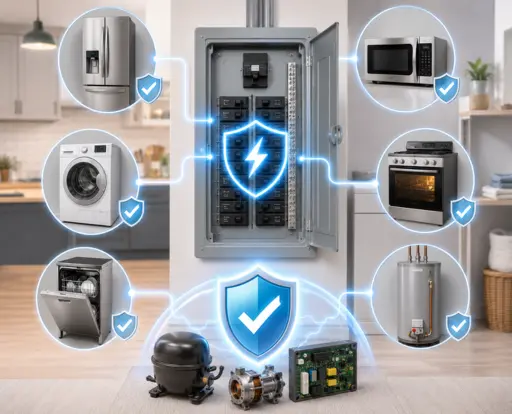
Modern homes rely on breakers to protect expensive appliances such as refrigerators, washing machines, dryers, dishwashers, microwave ovens, water heaters, garbage disposals, baking ovens, and vent hood systems. When excessive electrical current flows through a circuit, the breaker immediately shuts off power to prevent damage. Without this protection, electrical faults could destroy appliance components or create dangerous overheating conditions. This is why an appliance tripping breaker should never be viewed as normal appliance behavior.
Why Appliance Tripping Breaker Problems Should Never Be Ignored
A breaker only trips when it detects an unsafe electrical condition. This means repeated breaker trips should always be treated as a warning sign rather than an inconvenience. Ignoring an appliance tripping breaker problem may lead to:
Many homeowners seeking professional Appliance Repair in Sioux Falls discover that breaker trips were among the earliest appliances warning signs before a major appliance breakdown occurred.
Appliance Tripping Breaker Is Often Caused by Electrical Overloads
One of the most common reasons homeowners experience an appliance tripping breaker issue is excessive electrical demand on a circuit. Common situations include:
For example, a refrigerator compressor, microwave oven, and dishwasher operating on the same overloaded circuit may draw more power than the breaker can safely handle. Homeowners using appliance repair services in Crooks frequently discover that circuit overloads contribute to recurring breaker problems.
Faulty Appliance Components Can Trigger Breaker Trips
Internal appliance components naturally wear over time. As parts begin deteriorating, they often draw more electrical current than intended. Components commonly linked to breaker trips include:
These components may continue operating while gradually placing additional stress on the electrical system. Eventually, the breaker detects the abnormal current draw and shuts off power. Many of the common appliances problems homeowners encounter begin with electrical symptoms before complete appliance failure occurs.
Appliance Tripping Breaker and Overheating Are Often Connected
One of the most overlooked causes of an appliance tripping breaker is overheating. When appliance components become excessively hot, electrical resistance increases and system performance declines. This is particularly common when:
Homeowners who have experienced appliances overheat problems often report breaker trips shortly afterward. Overheating and breaker trips frequently occur together because both symptoms indicate excessive stress on appliance systems.
Poor Maintenance Can Lead to Electrical Problems
Many homeowners are surprised to learn that poor maintenance can contribute directly to breaker trips. Dust, grease, lint, and debris can interfere with airflow and force components to operate under higher temperatures. Over time, this additional strain affects motors, compressors, heating systems, and electrical controls.
For example, a homeowner experiencing a dryer takes too long to dry problem may also discover restricted airflow is causing overheating and increased electrical demand. Similarly, a refrigerator not cooling properly may run continuously, placing excessive strain on the compressor and electrical system. Routine maintenance helps improve efficiency while reducing the likelihood of electrical faults.

Water Leaks Can Create Electrical Faults
Water-related appliance issues can also contribute to breaker trips. Moisture reaching electrical components often creates short circuits or electrical leakage that immediately triggers the breaker. Appliances most commonly affected include:
Homeowners dealing with a washing machine leaking water problem frequently discover that moisture exposure eventually affects electrical systems as well. Prompt repairs help protect both appliance components and household electrical circuits.
Performance Problems Often Appear Before Breaker Trips
In many cases, an appliance provides warning signs before breaker trips become frequent. Recognizing these symptoms early can help prevent more expensive repairs. Common warning signs include:
A homeowner experiencing appliance strange noises may later discover worn motors or failing electrical components. Likewise, a dishwasher not cleaning dishes issue may indicate circulation or heating system problems that affect overall electrical performance. Addressing these symptoms early often prevents larger failures.
Aging Appliances Become More Vulnerable to Electrical Failures
As appliances age, internal electrical systems naturally deteriorate. Wiring insulation weakens, motors wear out, sensors become less accurate, and control boards experience increased stress. Older appliances may begin showing symptoms such as:
Homeowners seeking home appliance service in Valley Springs often discover that preventative maintenance can significantly reduce electrical problems in older appliances.
Why Appliance Tripping Breaker Problems Increase Energy Costs
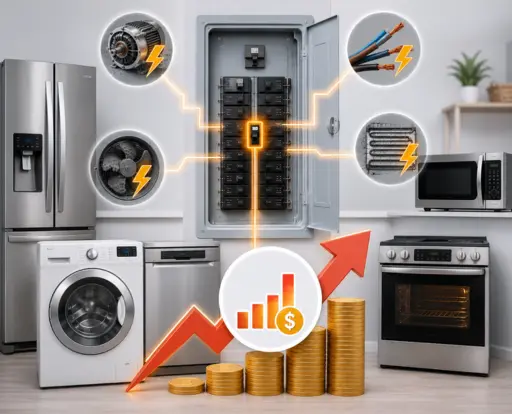
Many homeowners focus only on the inconvenience of a tripped breaker and overlook its effect on efficiency. Appliances operating with damaged electrical components often consume more electricity while delivering poorer performance. This is similar to situations where an appliance using more electricity begins increasing utility bills without obvious signs of failure. Electrical inefficiencies force components to work harder, increasing both operating costs and wear. Early repairs not only improve safety but also help reduce long-term energy expenses.
When Appliance Tripping Breaker Becomes an Emergency
Not every breaker trip requires emergency service, but some situations should never be ignored. Immediate attention is recommended when breaker trips occur alongside:
Many situations requiring emergency appliance repair begin with recurring breaker trips that homeowners repeatedly reset without investigating the underlying cause. If these symptoms occur, professional diagnosis should be scheduled immediately.
How Professional Repairs Fix Appliance Tripping Breaker Problems
Diagnosing an appliance tripping breaker issue requires more than simply replacing parts. Professional technicians use electrical testing equipment, diagnostic tools, and performance evaluations to identify the exact source of the problem. A technician may inspect:
Homeowners working with appliance repair experts in Dell Rapids and appliance repair services in Baltic frequently discover that early diagnosis prevents additional damage and significantly lowers overall appliance repair costs. Professional repairs also improve efficiency, restore reliability, and help extend appliance lifespan.
Frequently Asked Questions
Why is my appliance tripping the breaker repeatedly?
The most common causes include overloaded circuits, failing motors, damaged wiring, faulty heating elements, electrical shorts, and aging appliance components.
Can a bad appliance trip a breaker?
Yes. Faulty compressors, motors, control boards, heating systems, and wiring can all cause repeated breaker trips.
Is it safe to keep resetting a breaker?
No. Repeatedly resetting a breaker without diagnosing the cause can increase appliance damage and electrical safety risks.
Can water leaks cause breaker problems?
Absolutely. Moisture reaching electrical components can create short circuits and electrical faults.
Does appliance overheating cause breaker trips?
Yes. Overheating components often draw excessive current and may trigger the breaker as a safety measure.
When should I call a professional technician?
You should seek professional service whenever an appliance repeatedly trips a breaker or shows signs of overheating, burning odors, sparks, or declining performance.
Final Thoughts
An appliance tripping breaker is often one of the clearest indicators that something is wrong with an appliance or electrical circuit. Overloads, overheating, failing motors, damaged wiring, moisture exposure, aging components, and electrical faults are among the most common causes.
Rather than repeatedly resetting the breaker, homeowners should treat the issue as an early warning sign. Prompt diagnosis can prevent appliance damage, improve electrical safety, lower energy costs, and help avoid expensive future repairs. Whether the problem affects a refrigerator, dishwasher, washing machine, dryer, microwave oven, water heater, or another household appliance, early professional attention is usually the safest and most cost-effective solution.


