Appliance Repair vs Replacement | How to Make the Most Cost Effective Decision
When a major household appliance stops working properly, most homeowners face the same question: should you repair it or replace it? The answer depends on several factors, including the appliance’s age, repair costs, energy efficiency, reliability, and expected lifespan. In many cases, professional Appliance Repair in Sioux Falls can restore performance and save hundreds of dollars compared to purchasing a new appliance.
Making the wrong choice can become expensive. Replacing an appliance too early may result in unnecessary spending, while repeatedly repairing an appliance that is nearing the end of its lifespan can also waste money. Understanding the factors that influence this decision helps homeowners choose the option that provides the best long term value.
Why Appliance Repair vs Replacement Decision Matters
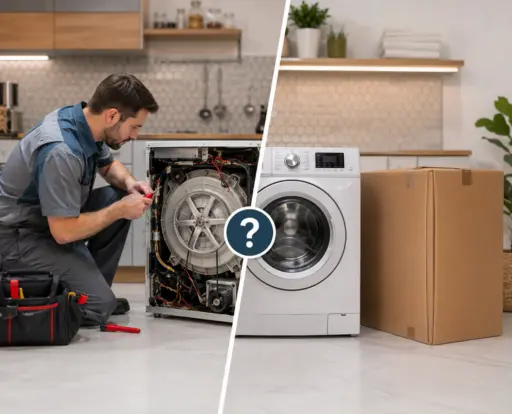
Household appliances are significant investments that impact daily convenience, energy usage, and overall household efficiency. Refrigerators, dishwashers, dryers, ovens, microwaves, and washing machines all play an important role in everyday life.When one of these appliances begins showing signs of failure, many homeowners assume replacement is the only solution.
However, modern appliance diagnostics often reveal that a single faulty component is responsible for the problem. In many situations, a professional repair can restore reliable operation and extend appliance life for several more years.This is especially true for homeowners seeking dependable appliance repair services in Baltic, where repair costs are often considerably lower than the cost of purchasing and installing a new appliance.
The Age of the Appliance Is an Important Factor
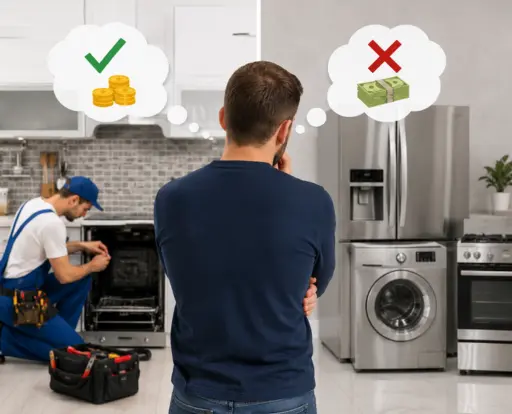
One of the first things technicians evaluate is the age of the appliance. Every appliance has an average lifespan that can help guide repair and replacement decisions.
Most appliances typically last:
Age alone should never determine whether an appliance should be replaced. Many appliances continue operating efficiently beyond their expected lifespan when properly maintained and repaired. However, age helps homeowners understand whether additional repairs are likely in the future.
Understanding the 50 Percent Rule
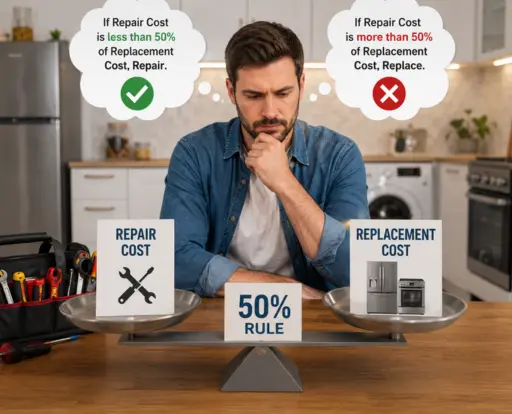
Many appliance professionals use a guideline known as the 50 Percent Rule when helping homeowners make repair decisions.The rule suggests that if a repair costs more than approximately 50 percent of the replacement cost, replacing the appliance may be the better investment. This helps avoid spending large amounts of money on appliances that may soon require additional repairs.
For example, replacing a refrigerator could cost significantly more than repairing a thermostat, evaporator fan, or control board. In these situations, repair often provides better value and avoids unnecessary replacement expenses.The rule is not absolute, but it serves as a useful starting point when comparing costs.
When Repair Is Usually the Better Choice
Many appliance failures involve individual parts rather than complete system breakdowns. When the appliance is relatively modern and otherwise in good condition, repair is often the most practical solution.
Repair is usually worth considering when:
For example, homeowners facing cooling problems frequently discover that an expert Refrigerator Repair Service can resolve the issue without the expense of replacing the entire appliance. Components such as thermostats, condenser fans, control boards, and sensors can often be repaired or replaced successfully. In many situations, a targeted repair restores performance while extending appliance lifespan for years.
When Replacement May Be the Smarter Investment
There are situations where replacement becomes the more cost effective option.
Replacement may be preferable when:
An older appliance that has required multiple repairs within a short period may continue creating unexpected expenses. Instead of repeatedly investing in repairs, homeowners may benefit from purchasing a newer model with improved efficiency and reliability. The overall condition of the appliance should always be evaluated rather than focusing on a single repair issue.
Energy Efficiency Can Influence Long Term Costs
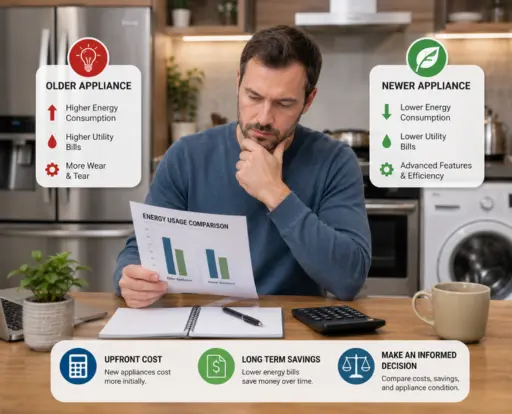
Modern appliances are often significantly more efficient than older models. New refrigerators, dishwashers, washing machines, and dryers typically consume less electricity and water while delivering improved performance. However, energy efficiency alone does not always justify replacement. A well maintained appliance that still performs reliably may continue offering excellent value despite lacking newer features.
Homeowners working with local appliance repair in Hartford SD often ask whether efficiency gains justify replacement. The answer depends on the age, condition, and operating costs of the existing appliance compared to newer alternatives. Balancing upfront replacement costs against potential energy savings helps create a more informed decision.
Common Appliances That Are Frequently Worth Repairing
Many household appliances remain excellent repair candidates because failures often involve replaceable components rather than complete system damage.
Examples include:
For example, a professional Dishwasher Repair Service can often resolve spray arm, circulation pump, filter, or drainage issues without requiring appliance replacement. In these situations, repair costs are often a small fraction of replacement expenses. Professional diagnosis helps homeowners determine whether the appliance still has substantial service life remaining.
How Frequent Repairs Affect Value
One repair does not necessarily indicate an appliance should be replaced. However, recurring breakdowns can change the financial equation. If an appliance requires service every few months, repair expenses may eventually exceed the value of keeping the appliance. Tracking repair history helps homeowners understand whether ongoing maintenance remains cost effective.
Many homeowners seeking appliance repair experts in Harrisburg ask whether repeated repairs signal the need for replacement. In many cases, the frequency of repairs provides valuable insight into the appliance’s remaining lifespan. When repair costs begin accumulating rapidly, replacement often becomes the more practical long term solution.
What About Smart Appliances?
Modern appliances increasingly rely on advanced electronics, sensors, WiFi connectivity, digital displays, and smart control systems. These features improve convenience but can also increase repair complexity. A smart refrigerator, dishwasher, or washing machine may experience software, sensor, or control board issues that require specialized diagnostics. Fortunately, many smart appliance problems remain repairable. The decision typically depends on repair costs, parts availability, and the overall condition of the appliance. Understanding the value of the appliance beyond its technology helps homeowners avoid making decisions based solely on new features.
Can Delaying Repairs Increase Costs?
Many appliance problems begin as relatively small issues. Unfortunately, delaying repairs often allows those issues to worsen. A refrigerator struggling to maintain temperature, a dishwasher delivering poor cleaning performance, or a dryer taking longer to dry clothes may continue functioning temporarily. However, continued operation often places additional stress on important components. For example, homeowners who delay necessary garbage disposal repair solutions frequently discover that minor jams develop into motor damage or complete disposal failure. The same principle applies to most household appliances. Addressing problems early often reduces repair costs and improves the chances of a successful repair.
How Preventive Maintenance Changes the Equation
Routine maintenance remains one of the most effective ways to extend appliance lifespan and reduce major repair expenses.
Preventive maintenance includes:
These practices improve efficiency, reduce wear, and help prevent many common failures. Homeowners looking for home appliance maintenance in Sioux Falls often discover that regular maintenance significantly delays the need for replacement and lowers long term ownership costs.
Questions Homeowners Should Ask Before Deciding
Before deciding whether to repair or replace an appliance, consider the following questions:
Answering these questions helps create a clearer picture of which option provides the greatest long term value. A professional diagnosis can often provide information that homeowners may not be able to determine on their own.
Frequently Asked Questions
Is it cheaper to repair or replace an appliance?
In many situations, repair is significantly less expensive than replacement. The final decision depends on repair costs, appliance age, and overall condition.
What is the 50 Percent Rule for appliance repairs?
The 50 Percent Rule suggests replacing an appliance if repair costs exceed roughly half of the replacement cost.
How long do most household appliances last?
Most major appliances last between 8 and 15 years depending on the appliance type, usage habits, maintenance history, and operating conditions.
Are older appliances always worth replacing?
No. Many older appliances remain reliable and economical to repair if major components are still functioning properly.
Can frequent repairs indicate replacement is needed?
Yes. Repeated breakdowns often suggest the appliance is approaching the end of its useful lifespan.
Should I get a professional diagnosis first?
Absolutely. Professional inspections frequently identify repairable issues that cost far less than purchasing a new appliance.
Final Thoughts
The decision between appliance repair and replacement should never be based solely on convenience or assumptions. Factors such as repair cost, appliance age, reliability, efficiency, and long term value all play important roles in determining the best solution. In many situations, professional repairs provide excellent value and help homeowners avoid unnecessary replacement expenses.
However, appliances experiencing recurring failures or costly component damage may eventually become better candidates for replacement. By carefully evaluating costs and seeking expert guidance when necessary, homeowners can make confident decisions that maximize appliance performance while protecting their household budget.


